Master Any Subject with the 2357 Method: Here's How
Master Any Subject: The 2357 Spaced Repetition Method That Actually Works
A scientifically proven framework to beat the forgetting curve
Stop Forgetting What You Learn
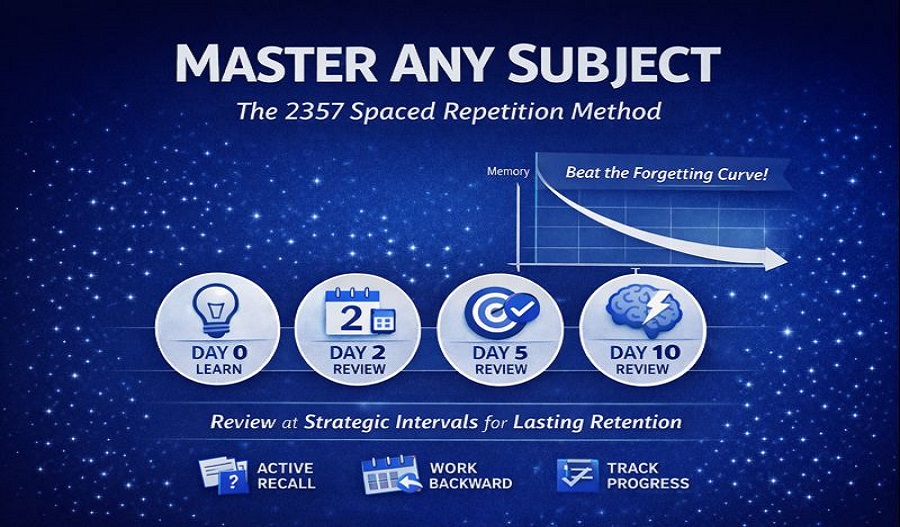
Cramming might get you through tomorrow's exam, but science proves it fails for long-term retention. The 2357 method is a simple spaced repetition framework that schedules reviews at Days 2, 5, 10, and 17 after learning—catching information right before it fades. By working backward from your exam date, you ensure each review happens at the perfect moment to strengthen memory. This evidence-based approach transforms how you study, making retention effortless and exam preparation stress-free.
Why Cramming Fails (And What Science Says Works Instead)
We've all been there: it's 11 PM the night before an exam, and you're frantically highlighting textbooks, rereading notes for the fifth time, hoping something sticks. You might even ace the test the next day. But ask yourself that same question a month later? Blank stares.
The problem isn't your intelligence or work ethic. It's that you're fighting against one of the most fundamental principles of human memory: the forgetting curve.
German psychologist Hermann Ebbinghaus discovered in the 1880s that we forget approximately 50% of new information within the first hour, and up to 70% within 24 hours. Without intervention, that knowledge simply evaporates.
But here's the good news: there's a scientifically proven way to beat this curve. It's called spaced repetition, and the 2357 method is one of the most practical frameworks for making it work in real life.
What Is the 2357 Method?
The 2357 method is a spaced repetition framework that schedules your reviews at specific intervals designed to intercept the forgetting curve right before information slips away. Instead of reviewing material randomly or cramming everything at once, you review at precisely calculated intervals:
Each review catches the information right as it's beginning to fade, which actually strengthens the memory pathway more than if you'd never let it weaken at all. This is called the "spacing effect," and it's one of the most robust findings in all of memory research.
Why This Pattern Works
The magic of 2-3-5-7 isn't arbitrary. These intervals are based on how human memory consolidation actually works:
The Initial 2-Day Gap
After learning something new, your brain needs time to begin consolidating that information from short-term to long-term memory. Reviewing too soon (like the next day) doesn't give this process time to work. But waiting too long means you'll forget too much and essentially have to relearn it. Two days hits the sweet spot.
Progressive Spacing
Each subsequent interval gets longer because each successful retrieval strengthens the memory trace. After you've successfully recalled something once, you can wait a bit longer before the next review. The 3-5-7 progression reflects this strengthening effect.
Active Retrieval
The key is that you're forcing your brain to actively recall the information, not just passively rereading it. This effortful retrieval is what builds long-term retention.
The Game-Changer: Working Backward From Your Exam
Here's where most students get spaced repetition wrong: they start reviewing from day one and hope the intervals magically align with their exam date. They rarely do.
The smarter approach is to work backward from your exam date to ensure your final review happens exactly when it will have maximum impact.
Example: Let's say you have an exam on March 15th, and today is February 1st. You have 42 days to prepare. Here's how you'd plan:
Step 1: Mark your exam date (March 15)
Step 2: Work backward to schedule your final review. Ideally, this should be 2-3 days before the exam, when the memory is fresh but you've given your brain time to consolidate. Let's say March 12 (Day 17 of your cycle).
Step 3: Count backward using the 2357 intervals:
- March 12: Final review (Day 17)
- March 5: Third review (Day 10)
- February 28: Second review (Day 5)
- February 25: First review (Day 2)
- February 23: Initial learning (Day 0)
Step 4: If you have multiple topics or chapters, stagger their start dates so you're not overwhelming yourself with too many reviews on the same day.
This backward planning ensures that each topic receives its final memory-strengthening review at the optimal moment before you need to demonstrate that knowledge.
Practical Implementation: Making It Work in Real Life
Start Small
Don't try to apply this method to everything at once. Pick your most challenging subject or the material you struggle to retain, and start there. Once you've built the habit, expand to other subjects.
Use Active Recall Techniques
Simply rereading your notes doesn't count as a proper review. During each review session, you need to actively test yourself:
- Close your notes and write down everything you remember
- Use flashcards (physical or apps like Anki)
- Explain the concept out loud as if teaching someone else
- Solve practice problems without looking at solutions
- Create mind maps from memory
Track Your Schedule
Use a simple system to track what needs reviewing when:
- A physical planner with color-coded subjects
- A spreadsheet with dates and checkboxes
- Apps designed for spaced repetition (though many use algorithms rather than the fixed 2357 pattern)
- A simple checklist with review dates written next to each topic
Adjust for Material Difficulty
Not all information is equally difficult to remember:
- For easier material, you might extend the intervals slightly (2-4-6-8)
- For particularly challenging concepts, you might add an extra review or shorten early intervals (1-2-3-5-7)
- For material you absolutely must retain long-term, continue the pattern beyond Day 17 (add reviews at Day 30, Day 45, etc.)
Batch Similar Content
If you're learning multiple related topics (like different chapters in the same textbook), start them on different days so your review sessions naturally include mixed practice, which further enhances retention.
Common Pitfalls to Avoid
Skipping Reviews: Life gets busy, and it's tempting to skip a review session. Don't. If you miss Day 5, the whole system breaks down. If you absolutely must skip, do that review as soon as possible and adjust subsequent intervals accordingly.
Passive Review: Glancing at your notes for five minutes doesn't cut it. Each review should involve active retrieval and take enough time to genuinely test your memory.
Not Recording What You Don't Know: During reviews, pay special attention to what you struggled to recall. These items may need additional review cycles or different learning approaches.
Trying to Learn Too Much at Once: The Day 0 learning session should be focused and digestible. If you try to cram an entire textbook chapter into one session, you won't retain enough for the subsequent reviews to be effective.
Beyond Exams: Lifelong Learning
While this blog has focused on exam preparation, the 2357 method works for any learning goal:
- Learning a new language (vocabulary, grammar rules)
- Professional certifications and licensing exams
- Musical instrument practice (scales, pieces, theory)
- Programming languages and frameworks
- Historical dates, scientific formulas, or any factual knowledge
The principle remains the same: strategically timed review sessions that catch information just as it begins to fade, progressively strengthening your long-term retention.
Your Next Steps
Ready to try the 2357 method? Here's your action plan:
- Identify your next exam or learning goal and mark the date
- Work backward to create your review schedule
- Commit to Day 0: Block out focused time to genuinely learn the material (not just skim it)
- Set reminders for each review date
- Use active recall during every review session
- Track your progress and adjust as needed
Remember: the goal isn't to study more hours. It's to study smarter, working with your brain's natural memory processes rather than against them. The 2357 method gives you a concrete, actionable framework to do exactly that.

.png)